
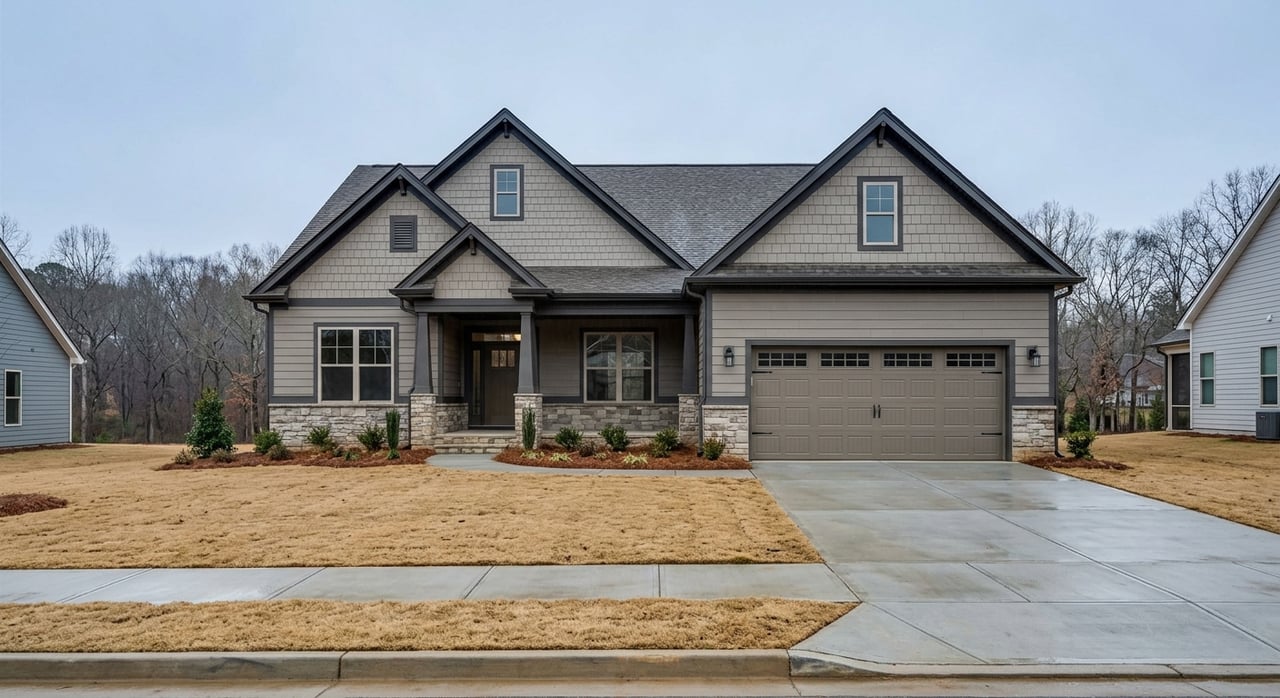
Thinking about buying brand-new in Sun Prairie? You are not alone, and the process can feel a little more layered than many buyers expect. In Sun Prairie, new construction is not just about picking a floor plan. It is also about understanding where growth is happening, how phased neighborhoods work, what rules come with a subdivision, and when a home may actually be ready. This guide will help you make sense of the Sun Prairie new-construction landscape so you can move forward with more confidence. Let’s dive in.
If you are searching for new construction in Sun Prairie, the west side is the place to watch most closely. According to the City of Sun Prairie, the Westside became the city’s primary growth area after the US-151/Grand Avenue interchange opened, and the city expects that area to remain the main growth corridor for the next decade or two.
That matters because most new-home opportunities are not scattered evenly across the city. Instead, they are often tied to the broader Westside and US-151 corridor, where larger planned neighborhoods continue to build out in phases. For buyers, that usually means more choices in homesites, product types, and timelines, but it can also mean more moving parts.
Sun Prairie’s planning approach also supports a mix of housing types instead of a one-size-fits-all neighborhood model. City planning goals include balanced neighborhoods, a mix of housing types, smaller lots, attached units, and discouraging low-density development in the urban growth area. In real life, that often translates to detached single-family homes, twin homes, and multi-family housing within the same broader development area.
Several current and planned communities help show what new construction looks like in Sun Prairie today. While inventory and availability can shift, these neighborhoods give you a practical sense of the market.
Smith’s Crossing is one of Sun Prairie’s best-known large residential developments. The city describes it as a traditional neighborhood design with more than 1,800 housing units, along with ongoing commercial development opportunities.
Recent city filings show that buildout is still continuing. In the McCoy Addition, plans included reworking 59 existing single-family lots into 71 lots, plus broader proposals for additional single-family, twin-home, and multi-family components. If you like the idea of an established area that is still growing, this is one neighborhood to keep on your radar.
The Reserve is an active new-home community with current and upcoming homesites. Its site materials highlight move-in ready homes, trails, a playground, open space, and access off the US-151 and WI-19 area via Waverly Way and Broadway Drive.
For buyers, The Reserve shows how Sun Prairie new construction often blends homes with shared outdoor features and phased lot releases. It is also a good reminder that location within the west-side corridor can affect both commute patterns and the feel of the neighborhood.
Providence is another active community in Sun Prairie’s Westside development area. Builder materials describe a mix of single-family and multi-family homes, open spaces, and access to the west-side retail corridor.
Current community marketing places pricing from the mid-$500s. That makes it one example of how Sun Prairie new construction can serve different budgets and preferences depending on the neighborhood, lot, and finish level.
One of the biggest surprises for buyers is that public discussion of a neighborhood does not mean homes are ready right away. In Sun Prairie, planning review is separate from the building permit phase.
The city’s Current Planning Projects page includes items such as plats, annexations, conceptual plans, zoning amendments, and other development activity. The city also makes clear that these reviews do not mean building permits have been issued. So if you hear about a future neighborhood early, it may still be a while before you can choose a lot or close on a home there.
Sun Prairie says planned developments move through four stages:
The general development plan stage includes a public hearing and council action. The precise implementation plan stage is a more detailed technical review and does not include a public hearing. For you as a buyer, that means a community can look real on paper long before construction is far enough along for a practical move-in date.
If you want to stay ahead of the market, it helps to watch the city’s planning pipeline, not just builder websites. Sun Prairie’s Current Planning Projects page is where the city posts active development items such as new construction proposals, plats, annexations, and zoning changes.
Plan Commission meetings are typically held on the second Tuesday of each month, and meeting materials are usually posted a few weeks in advance. If you are hoping to buy in a future phase or want a better sense of what is being approved nearby, this is often where the clearest early signals appear.
This does not mean every concept will become your next housing option right away. It does mean you can better understand whether an area is still expanding, how quickly it may be moving, and what kinds of housing products are likely to be added.
New construction timing can vary a lot by builder, lot, weather, and stage of construction when you sign. That said, it helps to understand both the city process and a builder example.
For one- and two-family homes, Sun Prairie’s inspection checklist includes items such as water and sewer laterals, footings, foundation, drain tile, rough inspections, insulation, mortgage survey, HVAC balancing, and final occupancy inspections. The applicant schedules inspections, and the city asks for up to two business days for inspection timing.
As one builder benchmark, Veridian says its homes take about 146 days to complete and include a guaranteed completion date. Its process also includes a pre-construction review, walk-throughs during construction, a new-home orientation, and 30-day and 11-month visits. That is a helpful point of reference, but your specific build may differ based on the builder, lot, and selections.
In many Sun Prairie neighborhoods, customization is best described as semi-custom rather than fully custom. You may have meaningful choices, but those choices usually happen within a builder’s design system and timeline.
Builder examples in the market show buyers selecting flooring, faucets, siding, cabinets, countertops, and other finishes through a design studio or design center. The practical takeaway is simple: many finish decisions need to happen early, often before framing is very far along.
If you know you want more control over finishes, ask that question early. You will want to understand which structural options are available, what cosmetic selections can be changed, and when each deadline hits. Waiting too long can limit your choices.
When buyers think about a new home, they often focus on layout and finishes first. Just as important are the rules that come with the neighborhood.
The City of Sun Prairie notes that neighborhood associations may exist as homeowners associations, with deed restrictions recorded with the subdivision. These HOAs are private corporations typically created by developers to manage common areas and, in some cases, review the design of new or remodeled homes.
That means exterior choices and future changes may be limited even when city code would otherwise allow them. Before you buy, it is smart to review subdivision rules carefully so you know what may apply to fencing, sheds, exterior colors, additions, or landscaping changes down the road.
Warranties are another area where details matter. A builder warranty is not the same as a home warranty or service contract, and the terms can vary by builder.
A common new-home warranty pattern often includes about one year for workmanship and materials, two years for major systems such as HVAC, plumbing, and electrical, and up to ten years for major structural defects. Some builders in the Sun Prairie area follow versions of that structure, including one-year limited warranty coverage or 1-2-10 style warranty programs.
You will want to read the actual warranty language, not just the summary. Pay close attention to what is covered, what is excluded, how claims are handled, and whether mediation or arbitration is required.
Sun Prairie new construction covers a fairly wide price range. A recent Redfin snapshot showed 21 new homes for sale in Sun Prairie with a median listing price of about $478,000.
At the community level, the spread is broad. Smith’s Crossing McCoy Addition was listed at roughly $414,900 to $634,900, Providence from the mid-$500s, and The Reserve starting at $679,900 and up. That range shows why it is important to compare neighborhoods based on the total package, not just the phrase new construction.
When you budget, think beyond base price. Ask about lot premiums, upgrade costs, landscaping, appliances, window treatments, driveway or patio inclusions, and any HOA dues. Those details can shift the true monthly and total cost more than many buyers expect.
If school boundaries matter to your move, verify them early in the process. Community materials for neighborhoods such as The Reserve and Smith’s Crossing direct buyers to the Sun Prairie Area School District for current zoning information, and the city’s neighborhoods page also connects residents with school resources.
Even within the same city, boundary assignments can differ by subdivision or phase. It is best to confirm the current school assignment directly before you make a final decision.
Location inside Sun Prairie also shapes your day-to-day experience in other ways. As you compare communities, think about your commute, access to the US-151 corridor, nearby retail areas, trails, parks, and whether you prefer a neighborhood that feels more established or one that is still actively building out.
In Sun Prairie, the right new-construction home is often the one that matches your timeline, comfort level, and lifestyle priorities, not just your favorite floor plan. A few questions can help you narrow the field quickly.
Ask yourself and your builder team:
Those answers often reveal more than a glossy brochure ever will.
Sun Prairie new construction is best understood as a collection of growing west-side neighborhoods, phased developments, and builder-specific processes, rather than one single market. If you take time to compare location, timing, warranty coverage, subdivision rules, and design flexibility, you will be in a much stronger position to choose a home that truly fits.
If you want help comparing communities, timelines, and lifestyle fit in Sun Prairie, Madison Lifestyle is here to help you navigate the details with local insight and boutique-level support.

Madison is more than just a zip code — it’s a lifestyle. Whether you want a loft in the city, a home in the ‘burbs, or a secluded cabin on wooded acreage, we’re here to help you find a place that feels like home.
MADISON LIFESTYLE
[email protected]
A: (608) 577-8318
W: (608) 212-2928
O: (608) 336-3311
ADDRESS 7633 Ganser Way Ste 101 Madison WI 53719