
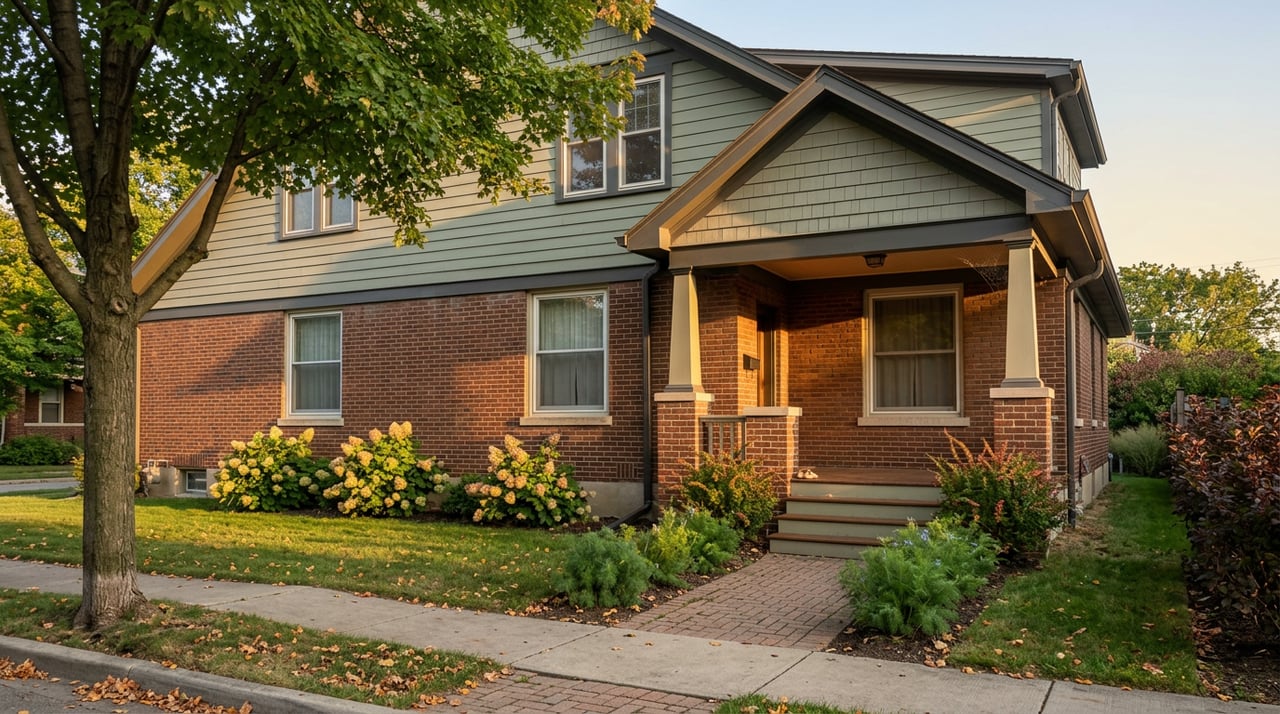
Walk the 1800 and 1900 blocks of Monroe Street on a Tuesday evening this August and you'll pass a bakery with flour still on the counter, a French bistro with the lights just coming up for dinner service, and at least one storefront with paper still taped over the glass. That last one isn't unusual. It's the pattern. Monroe Street has always had a rotating cast of storefronts, and if you've lived nearby long enough, you've learned to read the signs before the awning goes up. What most people miss is that the street isn't random about who sticks and who doesn't. There's a rule at work, and once you see it, you can't unsee it.
In the summer of 2024, a new farm-to-table pub called One & Only opened in the former Brasserie V spot, promising burrata panzanella salad, burgers and fries for the near west side's dinner crowd. It had the ingredients of a hit: a good location, a concept built for the neighborhood's tastes, an ambitious opening. By August 2025, it had shuttered, a little over a year after it opened its doors.
That's not a story about bad food or bad luck. It's a story about what Monroe Street asks of a business before it lets that business become part of the street. One & Only walked in as a stranger with a concept but no track record, no built-in customer base, no proof that Monroe Street specifically wanted what it was selling. The block gave it a shot. The block also moved on quickly when the shot didn't land.
Compare that to the openings that have actually stuck since. Alimentari, the Italian American deli known for its sandwiches and house-made ravioli, opened a second location at 2623 Monroe St. in early 2025. It wasn't a new concept testing the waters. It was an already-proven deli from Willy Street bringing its existing following west, doubling its footprint rather than starting from zero.
Turkish Kitchen did something similar the year before, relocating its kabobs and hummus from South Gammon Road to a Monroe Street storefront in a move reported at the time by Madison Magazine. Same business, same recipes, same regulars following it to a new address. No cold start required.
Even the newest addition just off the corridor follows the pattern. A bagel vendor that built a loyal following at the Monroe Street Farmers Market spent seasons selling out of a folding table before opening its first brick-and-mortar on Speedway Road this summer, a few blocks from the market stall where it earned its name. The storefront wasn't a bet. It was a graduation.
None of these businesses arrived on Monroe Street asking the neighborhood to take a chance on them. They arrived with the chance already taken, somewhere else, first.
The clearest version of this pattern showed up last fall, and it involves the same block where One & Only failed. Annemarie Maitri, who owns Bloom Bake Shop and the French bistro Lallande, purchased the former One & Only space at 1923 Monroe St., right next door to her other two businesses. The plan, as of last fall: expand Bloom's bakery production and open a new restaurant concept in the space come spring, with Maitri telling reporters she wasn't ready to share all the details yet.
Think about what that means for the storefront itself. The same square footage that couldn't sustain a brand-new concept from an outside operator got absorbed almost immediately by the merchant next door, someone who already had two successful businesses on the same block and didn't need to build trust with the street from scratch. That's not a coincidence. That's the mechanism. On Monroe Street, the safest bet on an empty storefront is often the neighbor who already has proof it can work here, not a newcomer betting that it might.
This same logic shows up in how the street runs its calendar, not just its leases. First Fridays happen from 4 to 7 p.m. on the first Friday of every month, with participating shops staying open late and rotating pop-ups, live music and specials. From June through September, those evenings get an extra layer: Music by the Water, sponsored by the Dudgeon-Monroe Neighborhood Association and Wingra Boats, brings kids' activities from the Monroe Street Art Center from 5 to 6 p.m. and a live band from 6 to 8 p.m. down at Wingra Park.
Orange Tree Imports runs its own version of the same trust-building instinct. Each First Friday, the shop picks a local nonprofit and donates 20 percent of its sales to it. In July, that spotlight went to the Madison Savoyards, the local Gilbert and Sullivan troupe, timed to the opening of their production of "The McAdo" on July 31. It's a small gesture, but it's the same pattern at community scale: businesses vouching for each other and for local institutions before asking customers to show up, building the kind of layered credibility that a single grand opening never can.
If you want to see the mechanism in action before summer wraps up, here's what's left on the calendar:
Forty-seven years is worth sitting with for a second. That's not a festival that got lucky once. That's a street that has spent nearly five decades proving, one fall at a time, that it rewards businesses and events with staying power over novelty.
None of this changes what you order for dinner tonight. But it explains something about the rhythm of the street you might have felt without naming it: Monroe Street isn't a graveyard for small business, and it isn't a lottery either. It's a place with a memory. The storefronts that last are almost always the ones that showed up with proof already in hand, whether that proof came from a farmers market table, a location across town, or the shop next door. The ones that don't last are usually the ones that asked the street to trust them first and prove it later.
That's useful to know the next time you're deciding whether a new spot is worth the walk, and it's the kind of detail that only comes from actually paying attention to a neighborhood over time rather than skimming a listing description. That's the same instinct we bring to the neighborhoods we work in every day at Madison Lifestyle. If you're curious what else is shifting along Monroe Street, in Vilas, or anywhere else in the Madison area, give us a call or text. Let's talk neighborhoods.

Madison is more than just a zip code — it’s a lifestyle. Whether you want a loft in the city, a home in the ‘burbs, or a secluded cabin on wooded acreage, we’re here to help you find a place that feels like home.
MADISON LIFESTYLE
[email protected]
A: (608) 577-8318
W: (608) 212-2928
O: (608) 336-3311
ADDRESS 7633 Ganser Way Ste 101 Madison WI 53719