
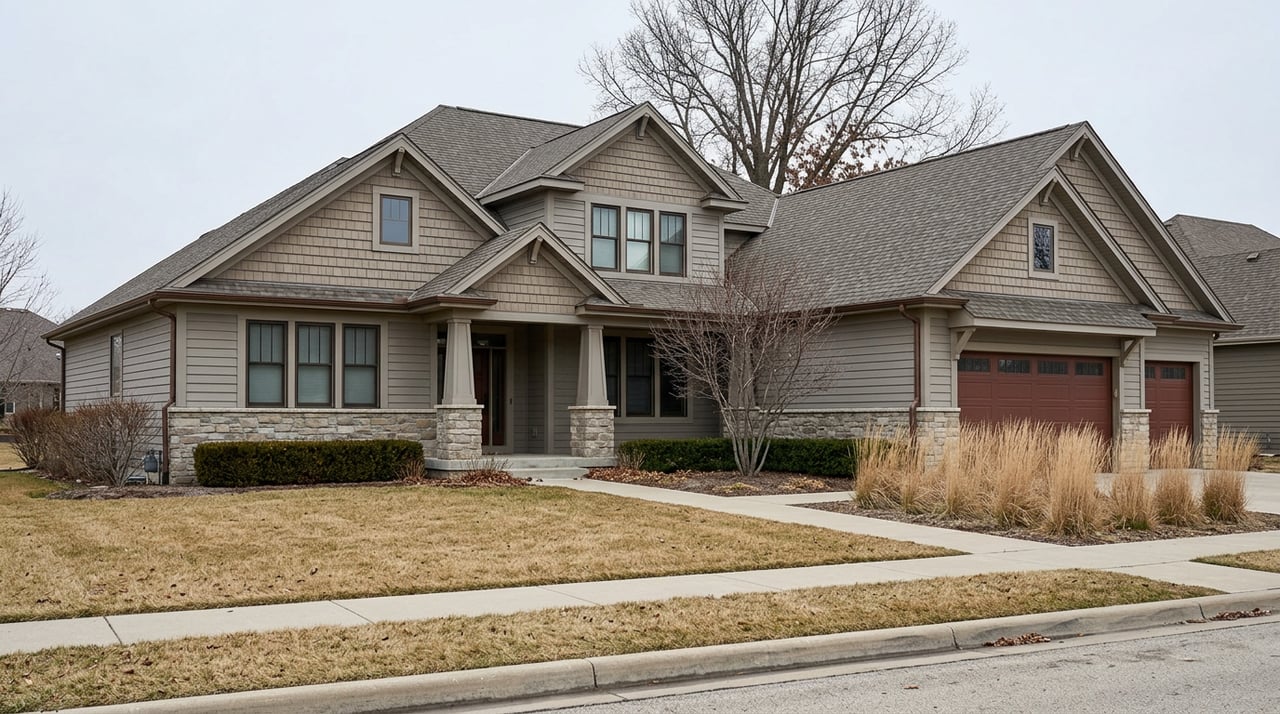
What did a house in Oregon, Wisconsin cost this year? The honest answer is that it depends entirely on which month you happened to check.
In January 2026, one widely used housing tracker pegged the village's median sale price at $430,000, down 7.5 percent from a year earlier. By April, a different site put the median at $479,649, with the average sale running higher at $534,272. June brought a third read: $502,000, down 8 percent year over year and down 9 percent from the month before. Then July arrived with a fourth number entirely: $551,666, up 16.2 percent from the same month in 2025.
Four snapshots. Four different stories. Same village.
If you're cross-shopping Oregon against Verona, Fitchburg, or Middleton, this is the moment where the spreadsheet stops helping you and the local knowledge has to take over.
| Month checked in 2026 | Reported median | Year-over-year change |
|---|---|---|
| January | $430,000 | -7.5% |
| April | $479,649 | not reported |
| June | $502,000 | -8% |
| July | $551,666 | +16.2% |
That July number and that January number describe the same village six months apart, and they're more than $120,000 apart. Nothing about Oregon's underlying housing stock changed that dramatically in six months. What changed was which specific houses happened to close.
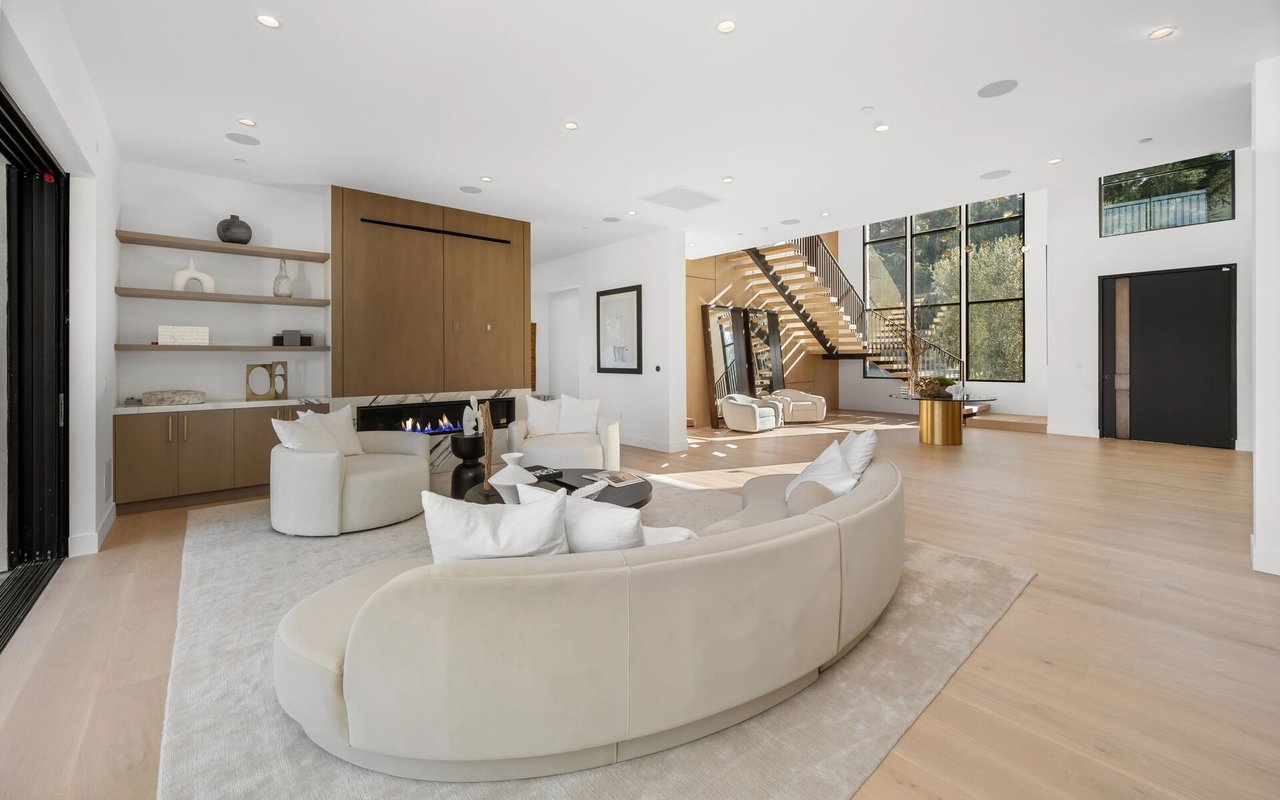
Take a concrete example. A four-bedroom, two-bath home on Lally Road closed August 31, 2026, for $385,000 through Compass Real Estate Wisconsin, agent Aaron Weber. It's a solid, unremarkable house on a nice lot with mature apple trees and a new roof. Meanwhile, that same season, a listing inside the gated Bergamont community was on the market with 12-foot coffered ceilings, Monogram kitchen appliances, in-floor heating under the main-level tile, and a four-season room. That's the kind of finish level that sits at the opposite end of the village's price spectrum from a Lally Road ranch, even before either one closes.
If the Lally Road sale and two or three homes like it close in the same month, the village median drops. If a Bergamont sale or two closes alongside them, the median jumps. In January, only 7 homes sold in the entire village, down from 12 the year before. That's not a housing market. That's a sample size too small to support a headline.
Oregon isn't Madison. It's a village of roughly 12,000 people, and in a typical recent month only about 19 homes sold across the entire market, alongside 14 condos, a townhouse, and two multi-family units also listed for sale. Total active inventory sat around 76 homes as of mid-August 2026.
When your entire monthly sample is under 20 closings, a single Bergamont luxury sale carries the same statistical weight as four Lally Road-style sales. The median isn't measuring demand shifting up or down. It's measuring which handful of sellers happened to accept an offer that particular month. A village this size can look like a seller's market and a buyer's market in the same quarter, purely because of which streets had closings.
This matters for anyone comparing Oregon to a larger suburb like Middleton or Fitchburg, where monthly sale counts are higher and the median has more homes averaging out the noise. In Oregon, the median is a coin flip dressed up as a statistic. Days on market and offer counts tell a steadier story. Recent listings have averaged around 44 to 53 days on market, and homes that do sell are drawing close to 9 offers on average, a sign that demand for the right house at the right price hasn't softened even while the median bounces around underneath it.
There's a second number that tells a quieter, more useful story: the aggregate home value estimate for the village, which one industry estimate places at $539,950. Compare that to Dane County's overall median home value of $335,400, and the national figure of $308,980, and you get a gap that has held steady even while the monthly sale-price headlines above swung by more than $120,000.
The difference is what each number actually measures. The monthly median reflects only the handful of homes that closed that month. The aggregate value estimate reflects every owned home in the village, weighted across the full range of housing stock from historic Main Street cottages to Bergamont estates. It moves slowly because it isn't hostage to which seven or nineteen houses happened to change hands. If you want a single number to anchor a conversation about what Oregon costs relative to the rest of Dane County, that gap is worth more than any single month's median.
Since the median won't tell you much on its own, the more useful exercise is knowing what each part of the village actually delivers for the money.
If someone tells you Oregon's median is $430,000 or $550,000, ask them which tier they're describing. Both numbers are true. Neither one is the whole picture.
The volatility isn't likely to settle down soon, because the village is actively adding inventory that will keep shifting the mix. In April 2026, the Village Board reviewed a plan to subdivide a 5.7-acre parcel on Winged Foot Drive into 11 new single-family lots. The Liberty Park LLC annexation, approved the previous September, is also still working its way toward finished homes. Both add supply at price points that don't yet exist in this month's data, which means next month's median has a good chance of moving again for reasons that have nothing to do with buyer demand.
None of this is surprising once you know the village has been growing steadily. The Wisconsin Department of Administration's October 2024 estimate put Oregon's population at 12,066, up from 9,231 in the 2010 census, a jump of nearly 30 percent over the decade. A village adding that many households doesn't produce a stable monthly median. It produces exactly the kind of noisy, tier-by-tier growth you're seeing in this year's numbers.
Why can't two housing sites agree on Oregon's median price? Because Oregon's monthly sales volume is small enough that a few closings at either end of the price range can swing the median more than actual demand does. Different sites also pull their snapshot on different dates, so they're often measuring different, small pools of closings to begin with.
What's a better way to compare Oregon to Verona or Fitchburg? Look at price per square foot within a specific subdivision tier rather than the village-wide median, and check days on market and offer counts, which have stayed more consistent than the median even as the headline number has bounced around.
A single median can't tell you what a Bergamont estate costs versus a Main Street cottage, and it won't tell you whether Oregon or Fitchburg is the better fit for your budget and timeline. That's the conversation worth having before you start touring.
Madison Lifestyle works Oregon and the rest of Dane County every week, tier by tier and subdivision by subdivision. Call or text Audra Geldmacher or Wanda Roche. Let's talk neighborhoods.
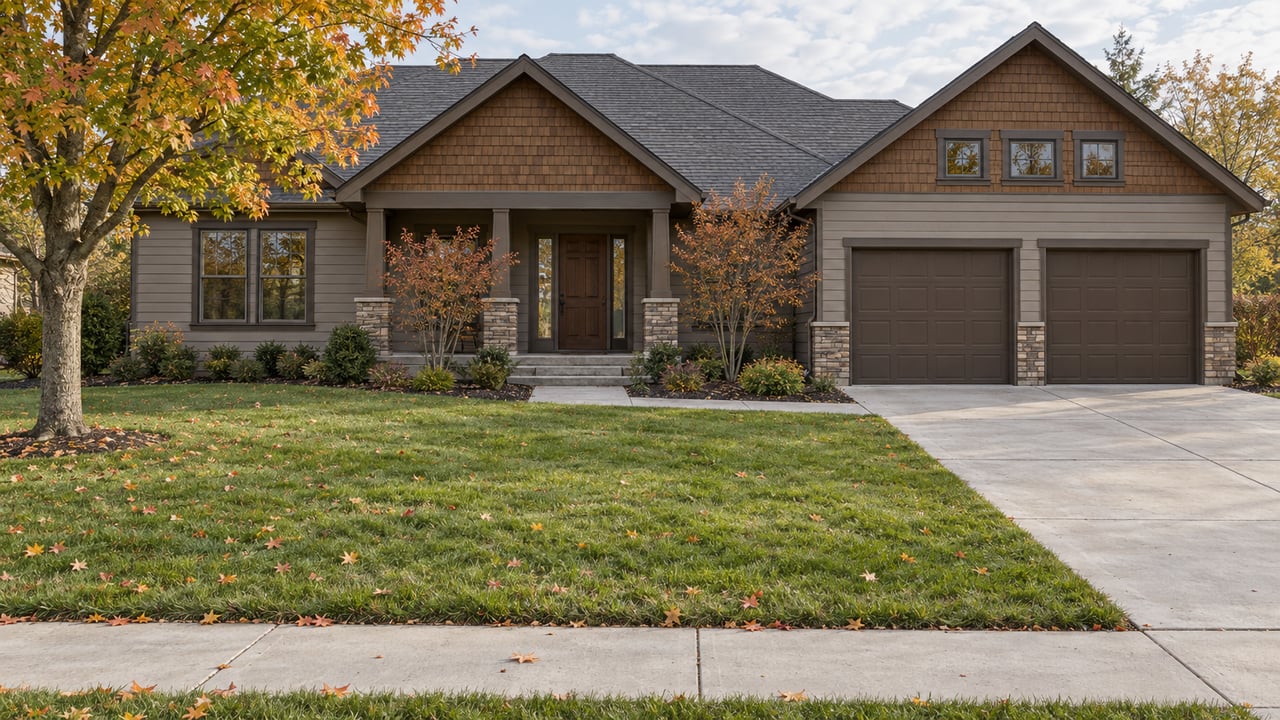

Madison is more than just a zip code — it’s a lifestyle. Whether you want a loft in the city, a home in the ‘burbs, or a secluded cabin on wooded acreage, we’re here to help you find a place that feels like home.
MADISON LIFESTYLE
[email protected]
A: (608) 577-8318
W: (608) 212-2928
O: (608) 336-3311
ADDRESS 7633 Ganser Way Ste 101 Madison WI 53719